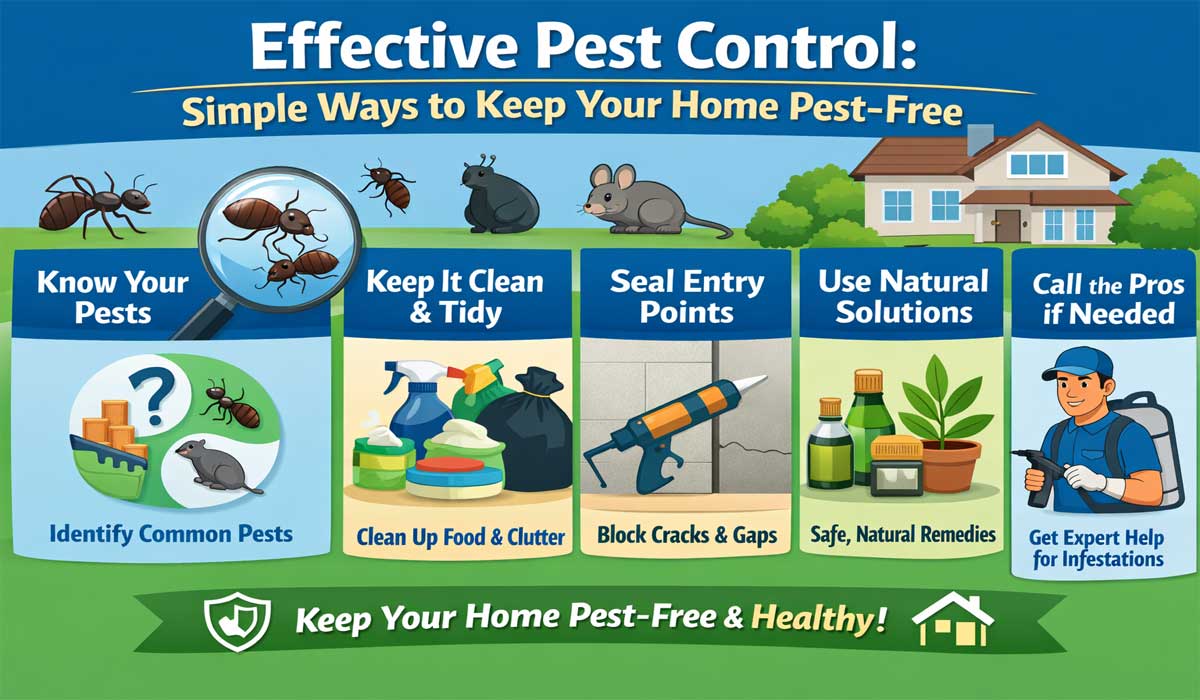
Field rats are among the most destructive agricultural pests worldwide, relentlessly gnawing through crops, undermining food security.
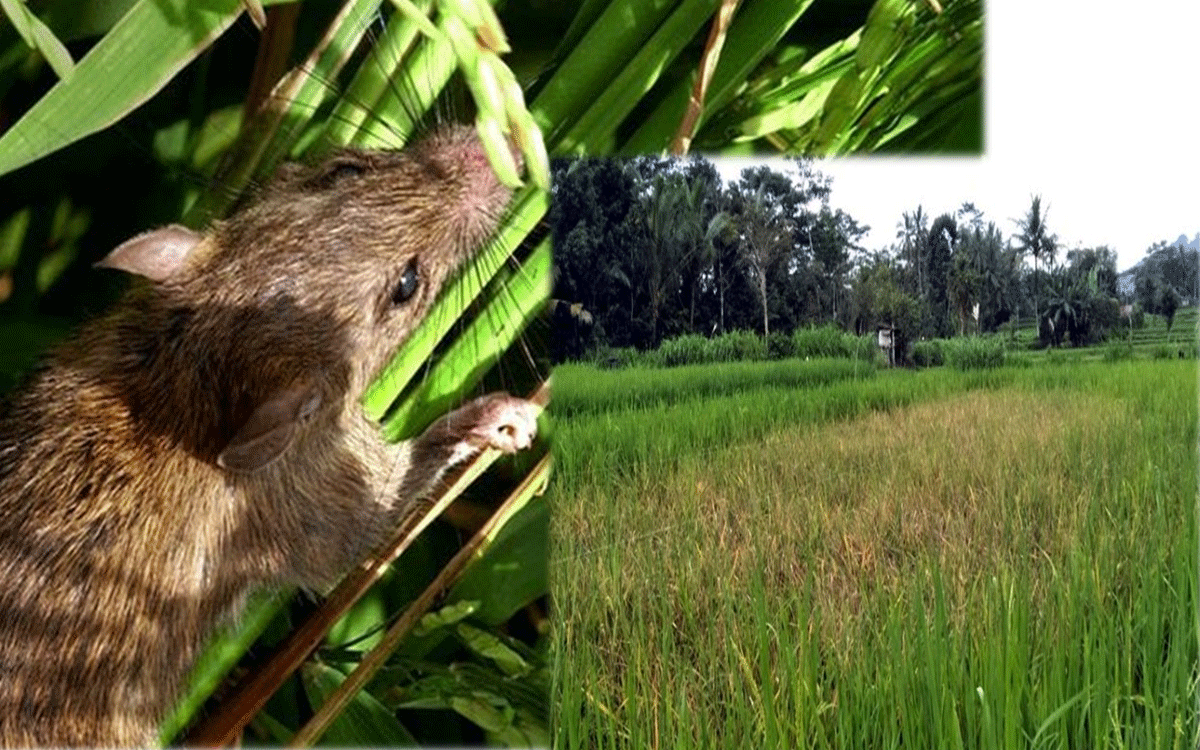
They attack crops from planting to harvest, reducing yields and farmer income. Understanding their behavior and applying integrated control methods can significantly minimize damage while maintaining environmental balance and long-term agricultural sustainability.
Listen and continue to follow the latest information on how to deal with pests in your garden, only at Effective Pest Control.
Understanding The Threat Of Field Rats
Field rats are highly adaptive rodents that thrive in agricultural landscapes. Their rapid reproduction and nocturnal feeding habits make infestations difficult to detect early, allowing populations to grow unnoticed until serious crop losses occur.
These rodents feed on seeds, roots, stems, and grains. Damage often appears in irregular patterns across fields, misleading farmers into underestimating the real cause. Beyond direct consumption, rats contaminate crops with droppings and urine, reducing quality.
Field rats also act as disease vectors affecting humans and livestock. Their presence increases health risks in rural communities. Therefore, managing field rats is not only an economic necessity but also an important public health measure.
Why Integrated Control Is Essential
Single control methods rarely provide lasting results. Rats quickly adapt to traps or poisons when used repeatedly. Integrated Pest Management combines multiple strategies to suppress populations effectively while reducing resistance and environmental harm.
Integrated control emphasizes prevention, monitoring, and targeted action. By understanding rat ecology and seasonal behavior, farmers can intervene at critical moments, such as breeding periods, when control measures are most effective.
This approach also reduces overreliance on chemical rodenticides. Balanced integration of biological, mechanical, and cultural methods ensures sustainability, protects non-target species, and supports long-term farm productivity.
Cultural And Environmental Management
Field sanitation is the first defense against rat infestations. Removing crop residues, weeds, and unmanaged field borders eliminates shelter and nesting sites, making fields less attractive to rodents.
Synchronized planting and harvesting among neighboring farmers reduce food availability across large areas. When crops mature simultaneously, rats cannot easily migrate between fields to find continuous food sources.
Proper irrigation management also helps. Excess water creates ideal burrowing conditions along dikes and embankments. Maintaining strong, compact field structures limits rat access and reduces their ability to establish colonies.
Read Also: Comfortable and Healthy Home How to Overcome Humidity and Water
Mechanical And Biological Control Methods
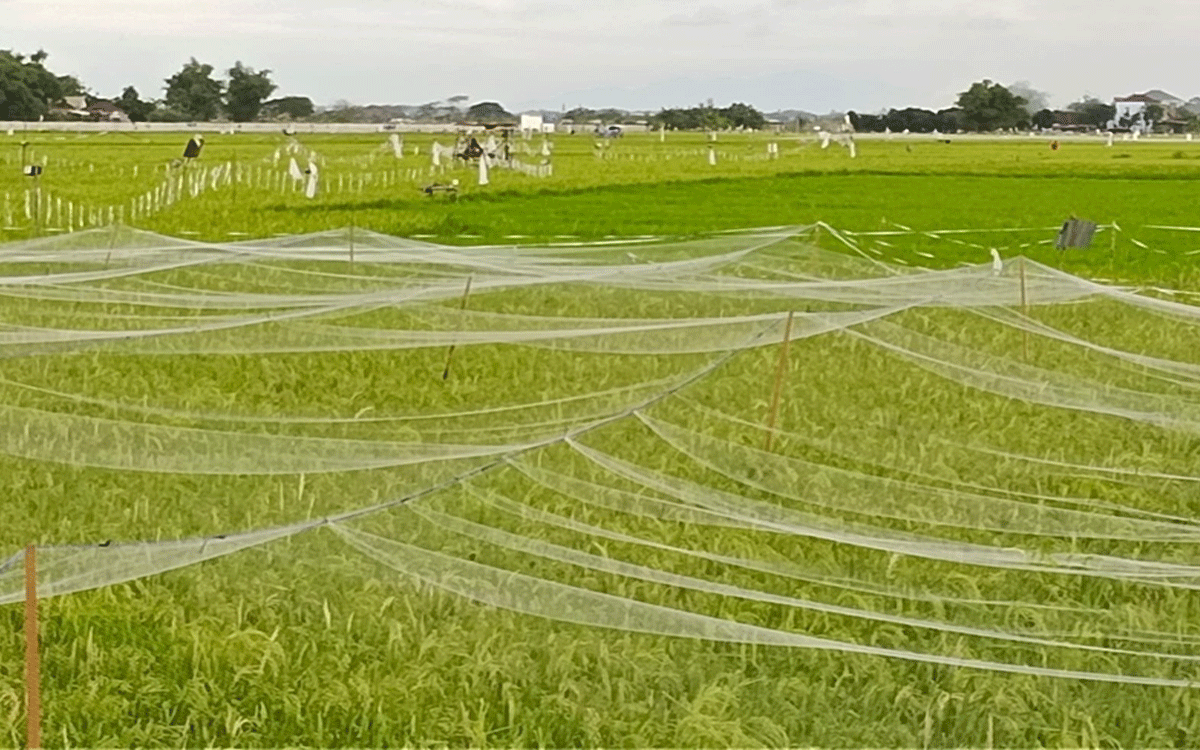
Mechanical control includes traps, barriers, and physical destruction of burrows. Strategically placed traps along rat pathways can significantly reduce populations, especially when combined with regular monitoring and maintenance.
Biological control leverages natural predators such as owls, snakes, and cats. Installing owl nesting boxes near fields encourages predation and provides a natural, ongoing suppression mechanism without chemical input.
Community-based hunting and burrow destruction campaigns are also effective. When conducted collectively, these actions disrupt breeding cycles and prevent rapid population recovery, maximizing the impact of non-chemical controls.
Responsible Chemical Use And Conclusion
Rodenticides should be used as a last resort and applied carefully. Selecting appropriate formulations and following dosage guidelines minimizes risks to humans, livestock, and beneficial wildlife while still reducing rat populations effectively.
Chemical control is most successful when timed during population peaks and combined with habitat management. This targeted use prevents excessive reliance on poisons and delays resistance development among rat populations.
In conclusion, integrated control methods offer the most reliable solution to crop-destroying field rats. By combining cultural, mechanical, biological, and limited chemical strategies, farmers can protect crops, preserve ecosystems, and ensure sustainable agricultural production for the future.
Take your time to read the latest and most viral information that you can only get at Effective Pest Control.
Image Source:
- First Image from distan.bulelengkab.go.id
- Second Image from clakclik.com