Bonsai trees are delicate living artworks that require careful attention, patience, and consistent maintenance.
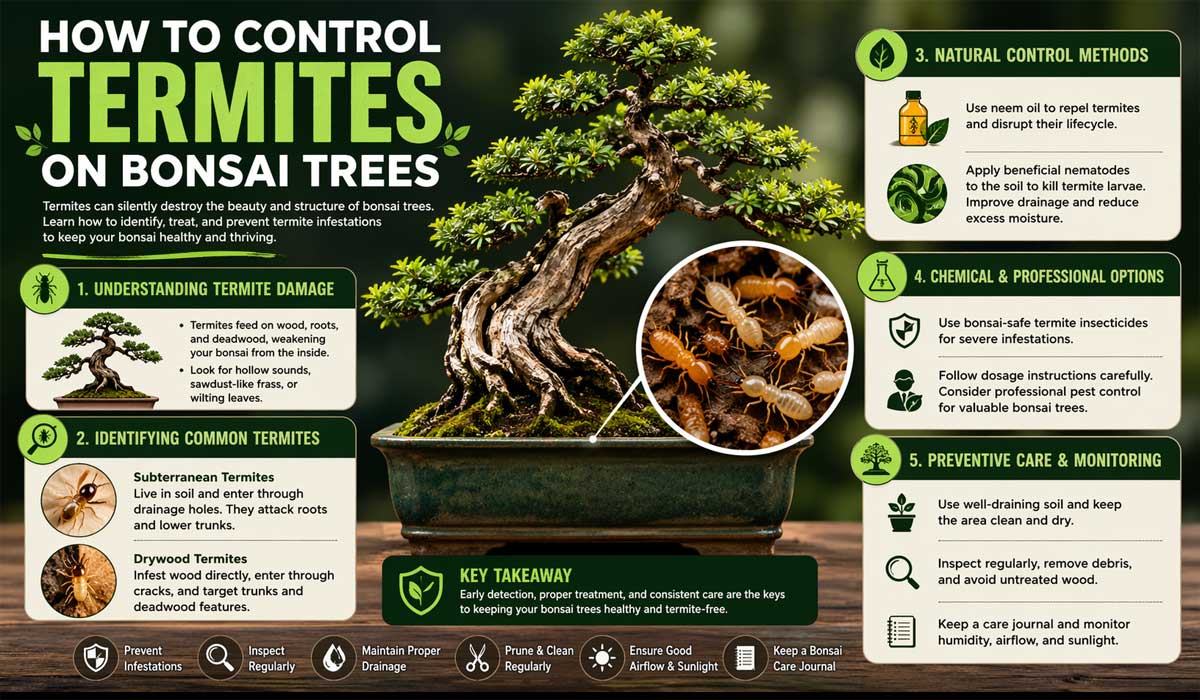
One of the most destructive threats to their health is termite infestation, which can silently damage roots, trunks, and branches before visible symptoms appear. Because bonsai trees are grown in limited soil and confined pots, they are even more vulnerable to pests like termites compared to regular garden plants.
Understanding Effective Pest Control how to identify, prevent, and control termites is essential for preserving the beauty and longevity of your bonsai collection.
Understanding Termite Damage in Bonsai Trees
Termites are small but highly destructive insects that feed primarily on cellulose found in wood. In bonsai trees, they can attack the trunk, roots, and even deadwood features, weakening the structure over time. Since bonsai trees are intentionally shaped and stressed for aesthetic purposes, any internal damage can quickly compromise their stability and appearance.
Early signs of termite infestation are often subtle. You may notice hollow sounds when tapping the trunk, fine sawdust-like material near the base, or weakening branches. In severe cases, leaves may wilt or fall unexpectedly. Recognizing these signs early is critical because termites often work from the inside out, making visible damage appear only at advanced stages.
Identifying Common Types of Termites Affecting Bonsai
Different species of termites can affect bonsai trees, but the most common are subterranean termites and drywood termites. Subterranean termites live in soil and enter the bonsai through drainage holes or soil contact, while drywood termites infest the wood directly without needing soil contact. Both types can cause serious structural damage if left untreated.
Subterranean termites are particularly dangerous for potted bonsai because they travel through moisture-rich environments. They build underground tunnels and silently feed on roots and lower trunks. On the other hand, drywood termites often enter through cracks or untreated wood surfaces, making older bonsai trees with deadwood features more vulnerable.
Understanding the type of termite infestation helps determine the most effective treatment method. Soil-based infestations require different strategies compared to wood-focused colonies, so accurate identification is an important first step in control.
Natural Methods to Control Termites in Bonsai Trees
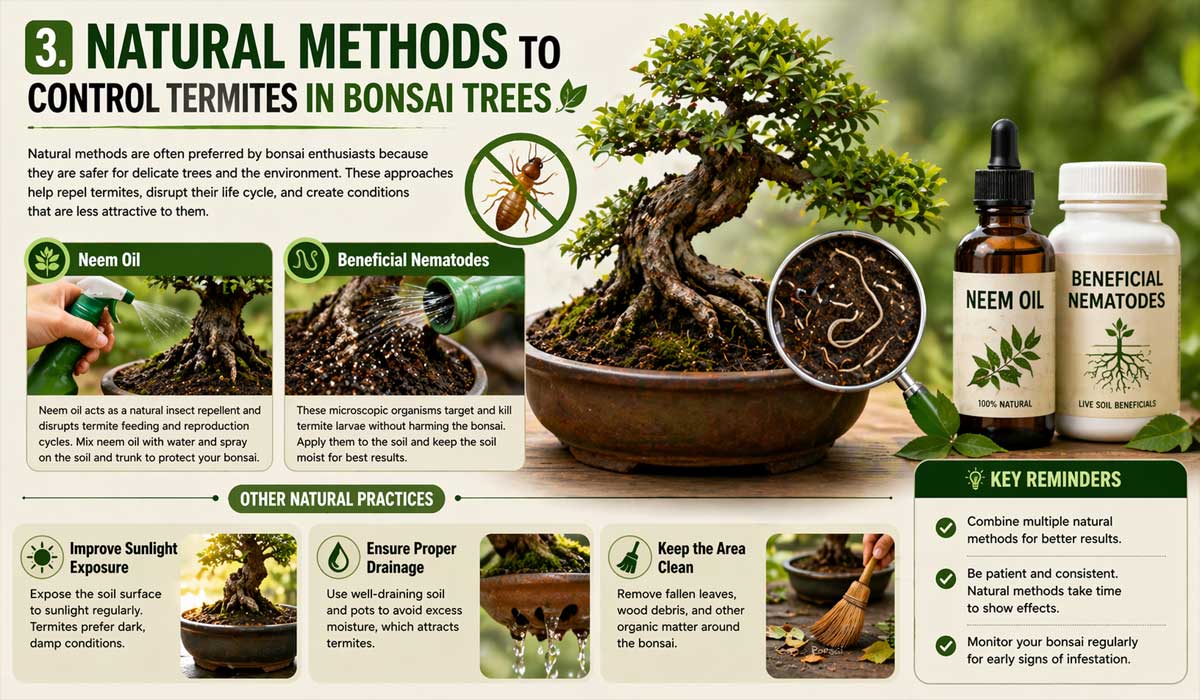
Natural methods are often preferred by bonsai enthusiasts because they are safer for delicate trees and the surrounding environment. One commonly used approach is neem oil, which acts as a natural insect repellent. When applied properly to the soil and trunk, it disrupts termite feeding and reproduction cycles.
Another effective natural method is introducing beneficial nematodes into the soil. These microscopic organisms target and kill termite larvae without harming the bonsai tree. Maintaining proper soil drainage and reducing excess moisture also helps create an environment that is less attractive to termites.
Regularly exposing the soil surface to sunlight can further discourage termite activity. Since termites prefer dark and damp conditions, controlled drying of the topsoil can help reduce their presence over time. Combining multiple natural methods often produces better long-term results than relying on a single approach.
Read Also: Natural Ways to Control Pests Without Chemical Pesticides
Chemical and Professional Treatment Options
In cases of severe infestation, natural methods may not be sufficient, and chemical treatments might be necessary. Specialized termite insecticides designed for ornamental plants can be applied carefully to the soil or affected wood areas. These chemicals work by eliminating active colonies and preventing further spread.
However, chemical treatments should always be used with caution in bonsai care. Because bonsai trees grow in limited soil volumes, overuse of chemicals can damage roots or disrupt the balance of the ecosystem within the pot. Always follow dosage instructions carefully and avoid repeated applications unless absolutely necessary.
For valuable or highly developed bonsai trees, professional pest control services may be the safest option. Experts can assess the severity of the infestation and apply targeted treatments that minimize risk to the tree while effectively eliminating termites.
Preventive Care to Protect Bonsai Trees from Termites
Prevention is always more effective than treatment when it comes to bonsai care. One of the most important preventive steps is maintaining proper soil hygiene. Using well-draining soil mixtures reduces excess moisture, which is a key factor that attracts termites.
Regular inspection of your bonsai tree is also essential. By checking the trunk, roots, and soil surface frequently, you can detect early signs of infestation before serious damage occurs. Cleaning fallen leaves and debris around the pot further reduces potential hiding places for termites.
Long-Term Maintenance and Monitoring
Long-term care plays a vital role in keeping bonsai trees healthy and termite-free. Establishing a consistent maintenance routine helps ensure that any pest activity is detected and addressed early. This includes scheduled watering, pruning, and soil replacement when necessary.
Monitoring environmental conditions is equally important. Bonsai trees kept in overly humid or poorly ventilated areas are more likely to attract termites and other pests. Adjusting placement to ensure proper airflow and sunlight exposure can significantly reduce risk.
Image Source:
First Image from: bugsbegone.org
Second Image from: bugsbegone.org