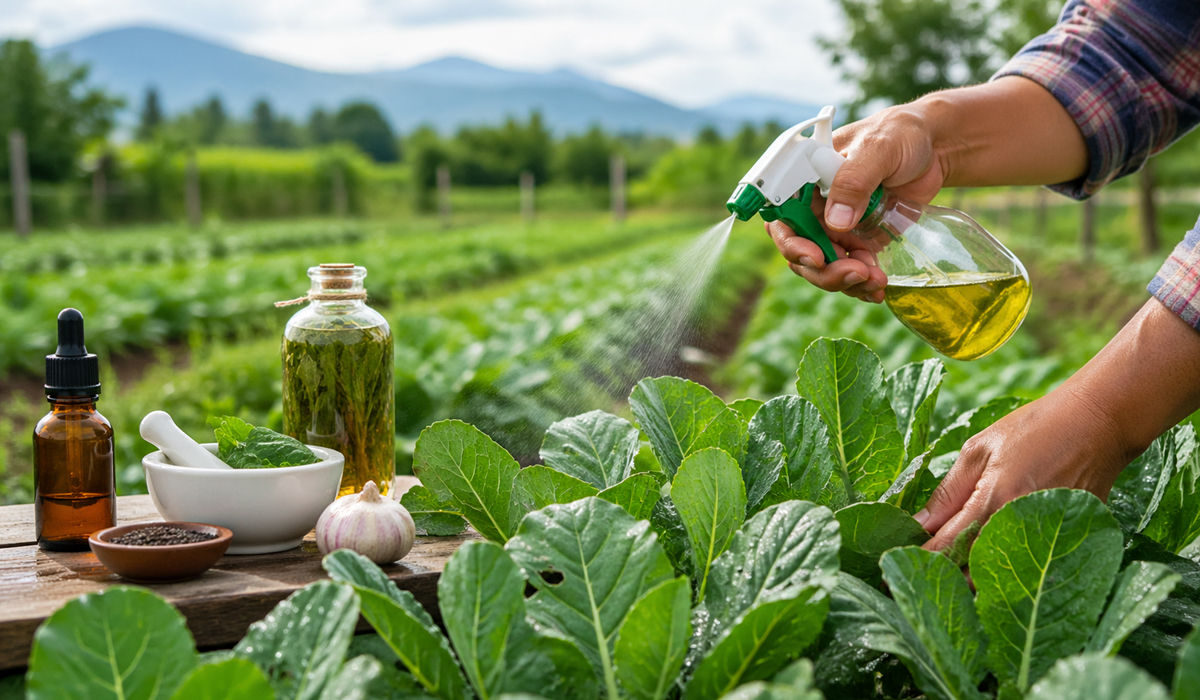

Organic pest control has become an essential approach in modern agriculture as farmers seek safer and more sustainable ways to protect crops.
Unlike chemical-based methods, organic pest control focuses on natural solutions that preserve soil health, biodiversity, and long-term productivity. This approach not only reduces environmental impact but also improves the quality and safety of agricultural products for consumers. Find additional information about organic farming methods in Effective Pest Control.
Understanding Organic Pest Control
Organic pest control is based on the principle of maintaining ecological balance rather than eliminating all pests completely. It encourages the use of natural predators, crop rotation, and environmental management to reduce pest populations.
This approach also emphasizes prevention rather than reaction. Healthy soil, diverse crops, and proper irrigation systems all contribute to stronger plants that are naturally more resistant to pests.
Natural Methods And Control Agents
One of the most effective strategies in organic pest control is the use of natural methods such as companion planting and botanical extracts. Certain plants naturally repel insects, while others attract beneficial insects that feed on harmful pests.
For example, marigolds are often used to deter nematodes and other soil pests in vegetable farming. Biological control agents also play a major role in managing pest populations. Ladybugs, parasitic wasps, and predatory mites are commonly introduced into farms to naturally reduce harmful insects.
Also Read: Smart Solutions To Control Pests Without Harming The Environment
Benefits For Crop Quality And Soil Health

Organic pest control significantly improves the quality of agricultural products. Since no synthetic chemicals are used, crops are free from harmful residues, making them safer and more appealing to health-conscious consumers.
In addition to crop quality, soil health also benefits greatly. Chemical-free farming preserves beneficial microorganisms in the soil, which are essential for nutrient cycling and plant growth. Over time, this leads to more fertile land and improved crop yields, ensuring sustainable agricultural production.
Implementing Integrated Pest Management
Integrated Pest Management (IPM) is a structured approach that combines multiple organic pest control techniques. It involves monitoring pest levels, identifying threats accurately, and applying the most appropriate natural solution at the right time.
IPM also encourages farmers to use a combination of cultural, biological, and mechanical methods. For instance, crop rotation disrupts pest life cycles, while physical barriers like nets prevent insects from reaching plants.
Challenges And Practical Solutions
Despite its benefits, organic pest control comes with challenges such as slower results and the need for more careful monitoring. Farmers may also face difficulties in managing large-scale infestations without chemical pesticides.
However, practical solutions such as farmer education, modern monitoring tools, and community-based farming support systems can help overcome these issues. By adopting innovative techniques and sharing knowledge, farmers can improve efficiency and make organic pest control more reliable and accessible.
Conclusion
Organic pest control offers a sustainable and environmentally friendly approach to protecting agricultural products. By relying on natural methods, biological agents, and integrated strategies, farmers can produce healthier crops while preserving soil fertility and ecological balance. Although it requires careful management and long-term commitment, the benefits in terms of product quality, environmental protection, and consumer safety make it a valuable practice for the future of
Image Source:
First Image from: bugsbegone.org
Second Image from: bugsbegone.org